Poems
Michael Glaser reads “Blessings”
from The Poet and The Poem public radio broadcast
produced by Grace Cavalieri
All poems on this page © Estate of Michael S. Glaser.
Please do not use without permission.
The Presence of Trees
Angles of Sunlight
The Economy of Days
Letter to my Fifth Grade Teacher
Grandmother’s Bureau
May 4
Waiting for the Muse
Tell Me Zucchini
Delta 1530
Gathering Chestnuts
Cancer
Advice to My Grandchildren
A Blessing for Saying No
Canopy
Cheekbones
Lil’ Bear
Conversation with Father
Rebekah
Migration
The Detail in a Lovers Eye
Breakfast at the B & B
The Problem with Haiku
Undeclared
Why I List When I Walk
All this Time
Gold
Poetry
A Blessing for the Woods
The Presence of Trees
Slowly, I am remembering
the language of awe,
how to take in, say,
the living complexity of a tree
its gnarled trunk,
its ragged bark,
the way its leafy canopy
filters sunlight
down to the brown
carpeted ground,
the way the wind bends my heart
to the exquisite presence of trees
the forest that calls to me as deeply
as I breathe,
as though the woods were
marrow of my bone as though
I myself were tree, a breathing, reaching
arc of the larger canopy
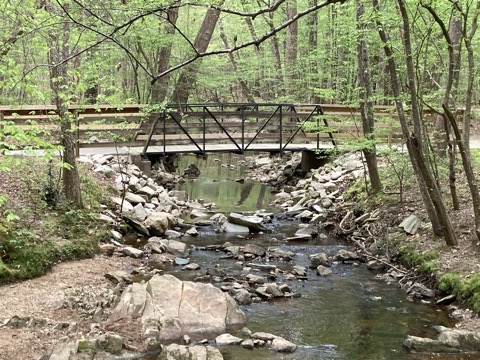
beside a brook bubbling to foam
like the one
deep in these woods,
that calls
that whispers home.
Angles of Sunlight
As I read Zen in the morning,
my young daughter leaves her bed
and lies next to me on the sofa
where sunlight angles through the window.
In half-sleep, her brown eyes
stare off at the large oak
unleaving in front of the house.
I cup her head in the palm of my hand,
feel the chambers of my heart fill and empty,
fill and empty like the words on the page fill
my spirit like the air in her purple balloon
like the breath of her lungs as her chest
rises and falls like the leaves on that tree
dancing in the wind and knowing
as they know,
something important
about attachment,
about letting go.
The Economy of Days
To want, to have, to do–
the verbs I live
in perpetual unrest.
How difficult to be–
to embrace the homely
details of my days
to open my heart
to the flow
of this amphibious life,
to trust in the motion toward
as a fish trusts
the river at its gills,
to trust in this journey,
to swim,
to be still.
Letter to my Fifth Grade Teacher
Dear Miss Lorenz:
I ‘m writing because I was remembering you today,
how soft and kind your voice was and how your eyes
sparkled with laughter and light
which is why I wanted to impress you
and why I was so afraid of spelling
where I knew you would discover
I was just another stupid kid.
And so, on the day of the Big Spelling Test,
I made that tiny piece of paper
and when we put our books away,
I cupped it in my hand for use
only when absolutely necessary.
And you moved up and down
the rows of our desks
pronouncing words until
you stopped next to me,
called out a word and,
when everyone was writing,
reached into my clenched fist,
took the paper and then
walked on.
You never made an example of me,
never spoke to my parents about it,
or even mentioned it to me.
And you never treated me differently either,
just went on as though nothing had happened.
But, of course, something did:
I never cheated again, Miss Lorenz.
I never stole another candy bar
or money from the box
in the top of my father’s dresser –
or from my mother’s purse.
And I am writing to thank you
for treating me with dignity
even as you caught me,
red-handed in sin.
It was as close to Grace as I have ever been.
Perhaps some day I’ll know it once again.
Grandmother’s Bureau
From the time I was seven, the top drawer
was the drawer of my fascination.
Each year I’d return to study the treasures there:
old rings and bracelets, a pocket watch, a silver box
with jewels set in the top, pills and hairpins,
pearls and stays, intricately sewn sachets
and above, wedged into the edges
of the bureau mirror, the photos:
her sisters and cousins, great aunts
and uncles, and my grandmother’s parents
gathered at her grandfather’s grave
before they left Poland for America.
I’d stare at them for hours, these images–
ancestors I could barely imagine
until there, in the center, I noticed one year,
rising up out of the mottled, silver mirror
my own face staring back at me from a past
that aimed both to claim and set me free.
May 4
To my students I recall the killings at Kent.
Whispers search for meaning in the classroom:
One shy voice remembers a song by Neil Young,
“I read something, somewhere,…” another says.
Perhaps they do not matter quite so much,
the dead, the living have endured
and what once was a nation’s horror,
a nation’s curiosity, is now
my own uncertainty, searching
for words on a spring day.
I think: On the Kent campus
some students are gathering to remember –
here in Maryland
the river is warming
and big Blue are being caught
in the bay for lunch.
Waiting for the Muse
Staring and staring at the page,
the blue lines take on voices
reminding, remanding
saying that they are no easy/essay
blue lines, no subway train
full of sweetly tweeting canaries
going from here to there for some
token or small fare.
More like love, they stare,
eyeball to eyeball,
asking for nothing less
than everything I dare.
Tell Me Zucchini
Tell me of springtime and morning birds,
of one red apple tossed from a car window,
tell me zucchini and wild blackberry jam
tell me body parts like eyesparkle and
lipsmile, tell me words like dusk-shine
and hair-canopy, tell me disappearing sweaters
and breast surprises, tell me surfcrashing
and lobsters boiling, seashells and ocean walks,
tell me cold ginger ale and raw cashews and drives
through the city and walks through a springsummer
wood to the riverlake.
Tell me separation and tears and lettertapes
through the mail, tell me phonebills and
quarterrolls, tell me sunshine and flat stones
skipping 1 2 3 4 5 times across
a cold clear pond, tell me airplane and new
oceans sunsets, tell me dreaming and morningdancing,
tell me laughter on nude beaches, singing in hot
baths and cool pacific breezes stretching wrinkled
red skin, tell me your hand in my hand, tell me eyes
intertwined and arm around arm, tell me weddingdance
and children, again children, again tell me canopy,
tell me youword and meword, tell me we,
then us again us again tell me we.
Delta 1530:
He returns to his mother
In the airport I want to speak,
but the gate agent calls and we hug
goodbye. I watch him disappear down
the long ramp. He does not look back.
The years teach how to ignore the sadness.
When he goes there is little left to do
but follow my feet toward short term parking.
I check my watch, the shopping list in my pocket,
drive out of the lot to the nearby Safeway
where I open the door to the roar of jet engines,
look up and see his plane
reaching into the sky as I hear myself
like a cheerleader who never quite made the team
calling into the roar above
a celebration of this unexpected
moment for love.
Gathering Chestnuts
When Chestnuts fall, their pods open
to heart and egg-shaped gems– nuts smooth
and shiny, with leathery skin.
Come Christmas, we will roast them, but for now
they are gathered as best we can. We sit
at the kitchen table. While I slice vegetables
for dinner, my daughter examines each chestnut,
putting these into egg cartons, placing those
back in their pods like puzzle pieces
before taking them out again, rearranging them,
feeling their smooth skin, turning them over
and over until she seems to know for certain
just where each should go. I marvel at her
strategies– how her tiny fingers release
each from its shell, determine for each
its place with such confident grace, such
grown-up busy-ness, absorbed in detail
and task. We talk and work until our thoughts
take us away in the silence of hands moving.
And when I look again her way, I see her
facing me like a mirror, her elbow propped
on the table, like mine, her arm curved
into a question mark, her small hand,
a loose-fisted rest for her head. She grins
and I smile back, seeing myself reflected
in her brown, chestnut eyes, imagining that she sees
herself, for this unguarded instant, in mine.
Cancer
I
On my way to work, the King Singers on the radio.
Their close harmonies soar — and I try to absorb
the sweetness of it,
to calm the errant growth, blooming inside.
On the cornfield hundreds of migrating geese
peck at the earth, glean sustenance for their journey.
I envy their instinct, their innocence.
In a year how many of us will still be alive?
Further on, the carcass of a deer
lies in the soybean field.
Plucked at by buzzards for over a week,
its cavity is now exposed.
II
I marvel at this giving
of what remains to sustain the living
and the gratitude I feel
for this moment
with the King Singers,
the migrating geese,
my cancer
and the body of that deer —
the vibrant offerings of this singular, sunlit day.
Advice to My Grandchildren
“Then David took his staff in his hand and chose five smooth
stones from the river, and put them in his shepherd’s bag…
and he drew near to the Philistine.”
1 Samuel 17-18
Aspire to be holy trouble-makers.
confound the doctrinaire,
Distrust governments, bureaucracies,
organized religions, your grandparents.
Feed the hungry
comfort the afflicted
care for the sick.
If you seek heroes,
let them be those who love
action more than words.
Be kind to the living
challenge the comfortable
bury the dead.
Keep sturdy books
and five smooth stones
by your bed.
A Blessing for Saying “No”
Blessed be the light that shines in saying “no,”
the courage of self
singing its claim into the world.
Blessed be laughter
rising from the belly.
Canopy
For Kathy
If I could have built monuments
or swayed eager crowds with rhetoric,
I might not have stood in awe of you;
but when you toss your hair back over one shoulder,
rainbow your arms around my head
and set your voice like a canopy upon me,
you name me syllables all your own:
I hunger for such disparate tones
Cheekbones
Slowly I am beginning to understand
why it is that tears appear
on the cheekbones of our elders.
I used to think it had to do with cold–
that age made eyes more vulnerable,
but yesterday, listening to my friend Tom
and seeing again those tears,
I began to glimpse
that eternal sadness we are born into
and the slow gathering of resignation
to the evidence that we have, indeed,
left the garden.
Mostly I like to imagine otherwise,
but in moments like yesterday
when words are spoken truly,
I am reminded that life,
however beautiful, is temporal.
and what but tears can speak to that?
Lil’ Bear
Men are heavily protected against hearing
stories of their own beauty.
~ Martin Shaw
Although I too am a bear with little brain,
I think I have discovered
that like the Hunny jar, only a quarter full,
I am o.k. — just as I am
and I do not have to become an old man
trembling with fears that I will never be enough,
but am free to leave this mountain of my aloneness,
stop craving honey and become like a bee
savoring the nectar of each day as I wing my way
from bud to blossom to bud to bloom.
Conversation with Father
The voice on the phone tells
of a shadow on the x-ray
of your lungs. You are 70,
you have been here before,
and that knowledge stiffens
my hand on the phone.
It is time for talk of love,
talk too long postponed,
but we speak of technology,
options and chemicals,
avoid the word cancer
and never mention death which,
like love, it seems, is too hard
to think of now, too hard to say.
I grip the phone in my hand
as though squeezing it could
change the words, the tone,
the numbers connecting us, the ringing
that goes on and on in my ears.
Rebekah
for Katie Coogan-Raley
This is the story of Isaac, son of Abraham.
Isaac was forty years old when he took to wife Rebekah,
The daughter of Bethuel the Aramean . . . ~ Genesis 25:19
Perhaps it is not so much
that we are loved,
as that we can love,
perhaps that is the secret . . .
to love even our own pain
and, after all that time,
to make something from it
so that it too might blossom,
might illumine the circles
in which we are called to dance.
Imagine Isaac, after the ram,
learning to love all over again.
Migration
Again, you have left your solitary sleep
and journeyed on child’s feet
to the warmth your sleeping mother makes,
this breathing space you’ve always called
your own.
Too tired to move you, I yank at the blankets
to claim back my share, to remind you
that I too, am here, grumbling to myself
‘this is not the way things are supposed to be.’
And you roll toward me. Your head migrates
unerringly to that space beneath my chin
where you snuggle in as if to remind me
that whatever the day has been
the love that fills this bed
is more than I might claim
by right or dreams to know.
And so I fall asleep, embraced
by the breathing that fills this space
with such delicate and, yes,
such undeservéd grace.
The Detail in a Lover’s Eye
I
Alert for details, the critic seeks things
that other eyes have left unseen
or change through hopes of fears
or historical frame,
chiseling out the detail,
discarding the detail,
misnaming the name
transporting the dream.
II
No wonder love seems blind, transforming
sight by slight of mind.
A critic’s role is to see
what is and what is not;
A lover’s duty is both to see
and not to see,
and thus to love, with all he is,
exactly what he’s got.
Breakfast at the B & B
“You don’t want that” —
It’s an expression I learned from my dad,
a way of saying, “let me help you,
I know about these things….”
“You don’t want that”
Usually it was said around food
though Father might have used it
in the clothing store or Mother
about a book or magazine.
“You don’t want that”
I said it to my wife this morning
about some canned grapefruit
slices she was going to eat.
She thought they were just fine,
but for the life of me,
I can’t understand why.
“You don’t want that,” I said,
trying to be helpful, feeling somehow
important, a man of savoir faire,
worldly wise, experienced . . .
feeling, in short, like my father
and proud of it, of course,
when my wife looked at me
with brows so tight the twinkle
disappeared from her eyes as she snapped,
“It’s not possible for you to imagine
someone liking something you don’t like,
is it!?”
I stared at her. I’m 64 years old.
I’m tired of being wrong.
I’m tired of having so much to learn
about who I am, and I’m tired of
discovering that having become
like my father doesn’t make me a man.
“I don’t need that” is what I wanted to say,
but the truth is, I do
and so I ate my bacon, becoming strangely silent,
like my father after his third bout with cancer
when he’d look out at a world he increasingly
did not understand and, with a gentleness
we hardly recognized, would say, astonished,
“Imagine that . . .” over and over again,
“Imagine . . . . Imagine that!”
The Problem with Haiku
Of all the things I
Wish would be, the one that most
Occurs to me is
UNDECLARED
For my advisees: Jane and Margaret and Yolanda (now called Mercedes)
You received in the mail today a letter from the administration,
“J. Hopkins LeRoy, Ph.D., Associate Provost” to be exact,
informing you that “according to college records,” your major
is still undeclared, and this failure is causing “a hold flag
to be placed on your academic record.”
The words UNDECLARED and HOLD FLAG are in caps
and boldfaced. You are instructed to complete the form
at the bottom of the page. You are warned that you
“may find it necessary to spend an additional semester” in college.
You are advised that you are “free to make an appointment”
with his secretary.
He sounds scary, this J. Hopkins LeRoy, Ph.D.
I haven’t heard threats like that since middle school.
I hope his letter does not worry you,
though knowing you as I do, it does.
I think of you each: incorrigible advisees,
spirits of the wind, sprites, sisters of the irrepressible grin,
explorers, yearners after, the bane of a registrar’s computer,
the infamous square pegs who do not fit into round holes.
You have always been, will always be.
How wonderful to be placed on Hold,
how freeing to be Undeclared.
When you come for advising in November,
remember, as you have been told,
to discuss this with me.
Age and time have worn me round.
I need to study your sharp edges
to learn what I can.
I need you to teach me again
how to be who I am.
Why I List When I Walk
As a boy, I learned
that if I felt too deeply
I might as well be a girl
and when I asked why,
I got a look that suggested
Maybe I was too much like one already.
So I shut up
and concentrated on
sculpting my body,
making my mind hard,
and keeping secret my fear
that if anyone ever saw me,
if anyone ever really saw me
they would find me soft
and frilly
and filled with tears.
All this Time
For Kathleen
God is a name that love gives to Being.
~ Joy Michelson
All this time,
looking into your eyes,
knowing the touch of your skin,
the sound of your laughter,
the gateway of your arms
rainbowed around my head.
All this time, blessed by the sanctuary
of your kindness, the nurture of your heart
your devotion to our children, the lights of Shabbat —
All this time, I have been living
in the presence of the name
that love gives to Being —
and I have failed
to name it, praise it
and say, amen.
Gold
for Josiah
Who would want to miss the world?
The barn swallow’s nest under the eve,
the fiddleheads unfolding in the forest,
the patter of spring rain
the way the mourning dove speaks to us
of our longings
and how unfailingly sunlight and moonglow
remind us that all light casts shadows.
The complexities of our lives urge us away
from knowing things as they are
from realizing that what we are drawn to
is God.
Poetry
Wanting more than hope
I turn to poetry for revelation,
instruction for my spirit,
courage for my re-awakening soul,
call it what you will
truth or rapture
or love’s embrace,
call it what it is
the consistently
unexpected surprise
of Beauty’s human face.
A Blessing for the Woods
Before I leave, almost without noticing,
before I cross the road and head toward
what I have intentionally postponed—
Let me stop to say a blessing for the woods:
for crows barking and squirrels scampering,
for trees and fungus and multi-colored leaves,
for the way sunlight laces shadows through
each branch and leaf of tree,
for these paths that take me in
for these paths that lead me out.

© 2026